- Your cart is empty
- Continue Shopping

Folding Container Homes: The Smart Future of Portable and Affordable Housing
-
admin
- Posted on
- 0 comments

Folding Container Homes: The Smart Future of Portable and Affordable Housing
The housing industry is rapidly embracing innovation, and one of the most exciting developments is the rise of folding container homes. Designed for quick deployment, efficient transportation, and modern living, they are transforming how people think about residential construction, temporary housing, and off-grid living.
Unlike traditional homes that require lengthy construction schedules, they arrive ready to expand into comfortable living spaces within hours. Their portability, affordability, and versatility make them an increasingly popular choice for homeowners, businesses, developers, and governments worldwide.
What Are Folding Container Homes?
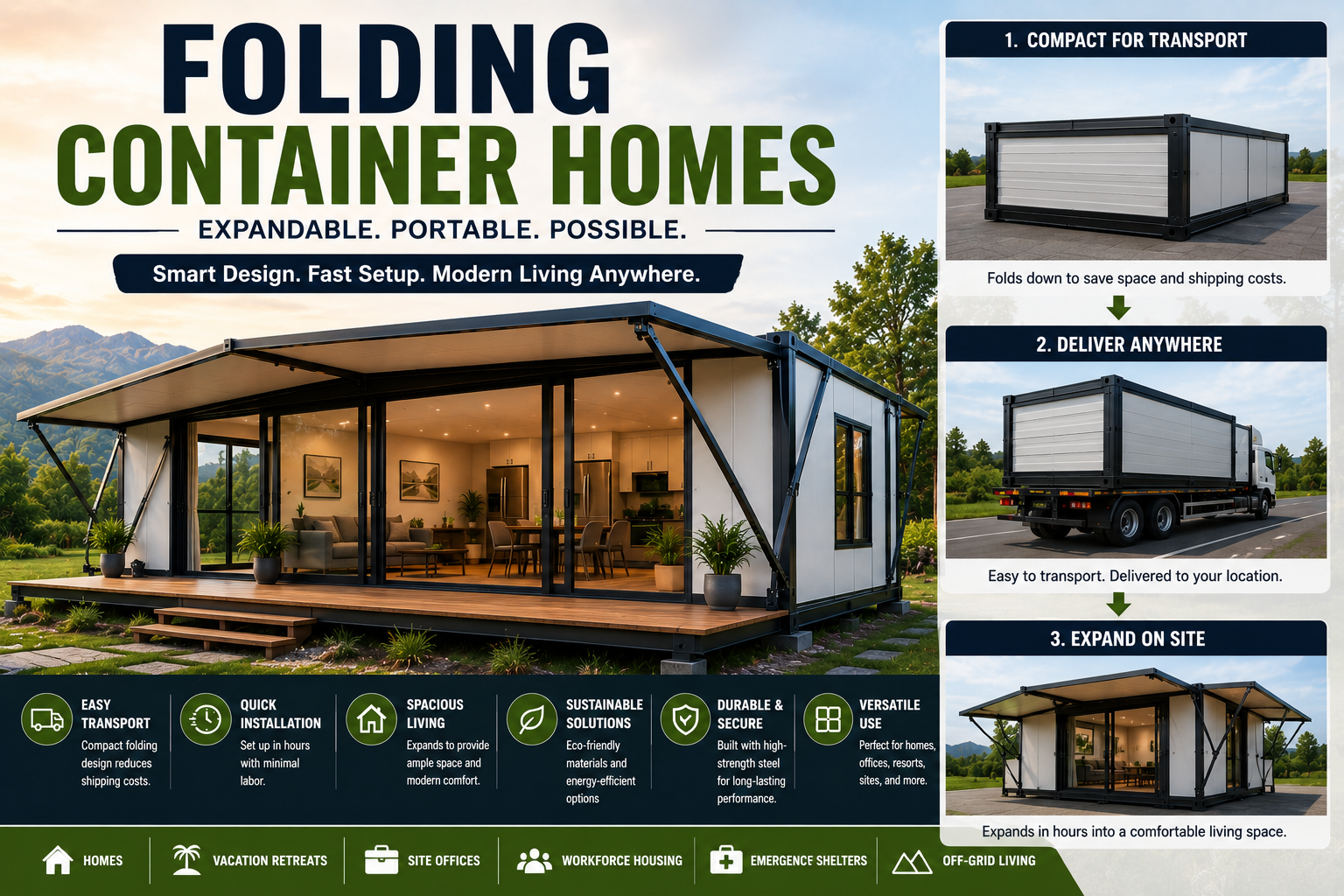
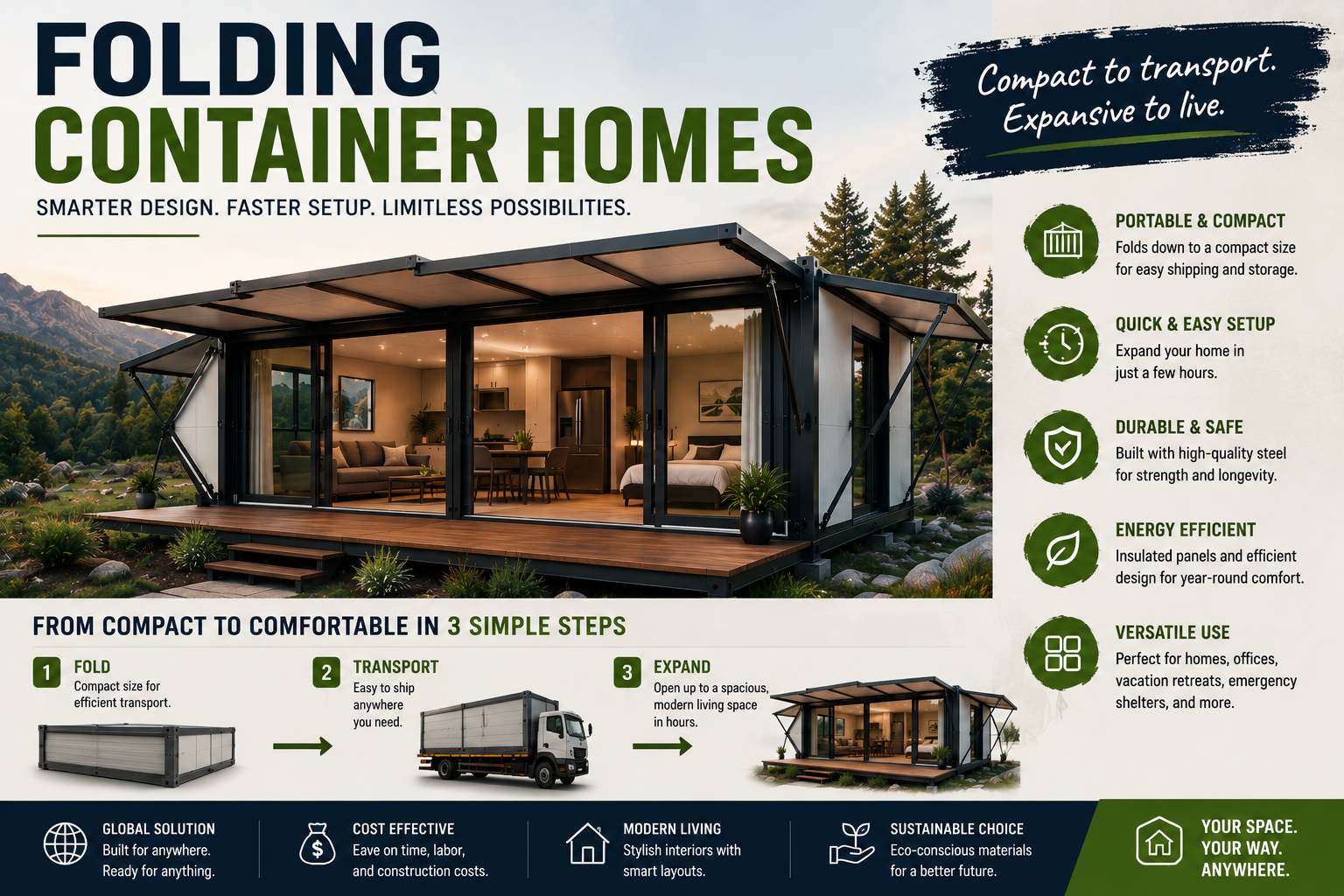
They are prefabricated modular structures engineered to collapse into a compact shipping form and expand into a larger, fully functional building upon arrival at their destination.
Unlike standard shipping container homes, which maintain fixed dimensions, they utilize innovative structural systems that allow walls, floors, and roof sections to unfold and create significantly more interior space.
These homes can be used for:
- Permanent residences
- Vacation homes
- Tiny houses
- Guest accommodations
- Workforce housing
- Emergency shelters
- Site offices
- Medical facilities
Their flexibility has made them one of the fastest-growing segments of the modular housing industry.
How Folding Container Homes Work
Compact Transportation
Before deployment, the home folds into a compact unit that occupies significantly less transportation space than a fully assembled structure.
This provides several advantages:
- Lower shipping costs
- Easier transportation logistics
- Reduced storage requirements
- More units transported per shipment
Rapid Expansion
Upon delivery, the structure unfolds using integrated mechanical systems and engineered connections.
Many folding homes can be installed in just a few hours, dramatically reducing construction timelines.
Why Folding Container Homes Are Growing in Popularity
Faster Construction
Traditional home construction often takes months or years. They can be delivered and assembled within days.
Affordable Housing Solution
Reduced labor, transportation, and construction costs make folding homes an attractive alternative to conventional housing.
Increased Mobility
Unlike traditional houses, they can often be relocated if circumstances change.
Sustainable Building Practices
Many folding homes incorporate:
- Energy-efficient insulation
- Solar-ready systems
- Eco-friendly materials
- Water-saving technologies
These features help reduce environmental impact while lowering long-term operating costs.
Key Features of Folding Container Homes
Expandable Living Space
The biggest advantage is the ability to create spacious interiors from compact transport units.
Modern Interior Design
Today’s folding homes often include the following:
- Open-concept floor plans
- Full kitchens
- Modern bathrooms
- Comfortable bedrooms
- Built-in storage solutions
Durable Construction
Most units are built using:
- Galvanized steel frames
- Reinforced structural supports
- Weather-resistant wall panels
- High-strength connection systems
Energy Efficiency
Advanced insulation systems help maintain comfortable indoor temperatures throughout the year.
Popular Uses for Folding Container Homes
Residential Housing
Homeowners increasingly choose folding container homes as
- Primary residences
- Backyard guest houses
- Vacation cabins
- Retirement homes
Emergency Response Housing
Governments and relief organizations use folding homes for rapid disaster response and temporary shelter solutions.
Remote Workforce Accommodation
Industries such as mining, energy, and construction benefit from portable housing that can be deployed quickly to remote locations.
Tourism and Hospitality
Folding container homes are becoming popular for:
- Eco-resorts
- Glamping accommodations
- Short-term rentals
- Boutique hospitality projects
Benefits of Folding Container Homes
Lower Transportation Costs
Compact folded designs reduce shipping expenses significantly.
Quick Installation
Many units can be assembled with minimal equipment and labor.
Flexible Applications
Homes can be relocated, expanded, or repurposed as needs change.
Minimal Site Impact
Prefabrication reduces construction waste and minimizes disruption to the building site.
Modern Appearance
Contemporary folding homes offer sleek architectural designs that appeal to today’s buyers.
Folding Container Homes vs Traditional Container Homes
Traditional Container Homes
- Fixed dimensions
- Permanent structural modifications
- Heavier transportation requirements
- Longer construction schedules
Folding Container Homes
- Expandable floor space
- Easier transportation
- Faster deployment
- Greater flexibility
For many buyers, folding designs provide a more practical and efficient solution.
Important Considerations Before Buying
Building Regulations
Local zoning laws and permit requirements vary by location and should be researched carefully.
Site Preparation
Although installation is fast, proper site preparation remains essential.
Utility Connections
Water, electricity, sewage, and internet access should be planned before deployment.
Climate Suitability
Insulation and HVAC systems should be selected based on local weather conditions.
How Much Do Folding Container Homes Cost?
Costs depend on:
- Home size
- Expansion capabilities
- Interior finishes
- Utility systems
- Transportation distance
Entry-Level Models
Suitable for temporary housing and basic residential use.
Mid-Range Models
Offer larger living areas and upgraded amenities.
Luxury Folding Homes
Include premium materials, smart home technology, and custom architectural features.
Even premium folding homes often remain more affordable than traditional residential construction.
The Future of Folding Container Homes
As housing affordability becomes a global concern, they are expected to play a significant role in the future of residential development.
Advancements in:
- Modular engineering
- Smart home integration
- Renewable energy systems
- Sustainable construction materials
They are making folding container homes increasingly attractive to homeowners and investors alike.
Industry analysts predict strong growth in demand for portable and expandable housing solutions over the coming decade.
Why Folding Container Homes Are a Smart Investment
Modern buyers value:
- Affordability
- Flexibility
- Sustainability
- Fast construction
- Mobility
They successfully combines all of these benefits into one innovative housing solution.
Whether you’re looking for a primary residence, vacation retreat, rental property, or emergency shelter, they provide a practical and future-ready alternative to conventional construction.
Conclusion
Folding container homes represent one of the most innovative trends in modern housing. Their ability to fold for efficient transportation and expand into comfortable living spaces offers unmatched flexibility, affordability, and convenience. As technology continues to improve and demand for alternative housing grows, they are positioned to become a major part of the future housing market, providing smart solutions for homeowners, businesses, and communities worldwide.