- Your cart is empty
- Continue Shopping

Foldable Container Home: Portable Housing for Modern Living
-
admin
- Posted on
- 0 comments
Foldable Container Home: The Future of Smart, Portable, and Affordable Living
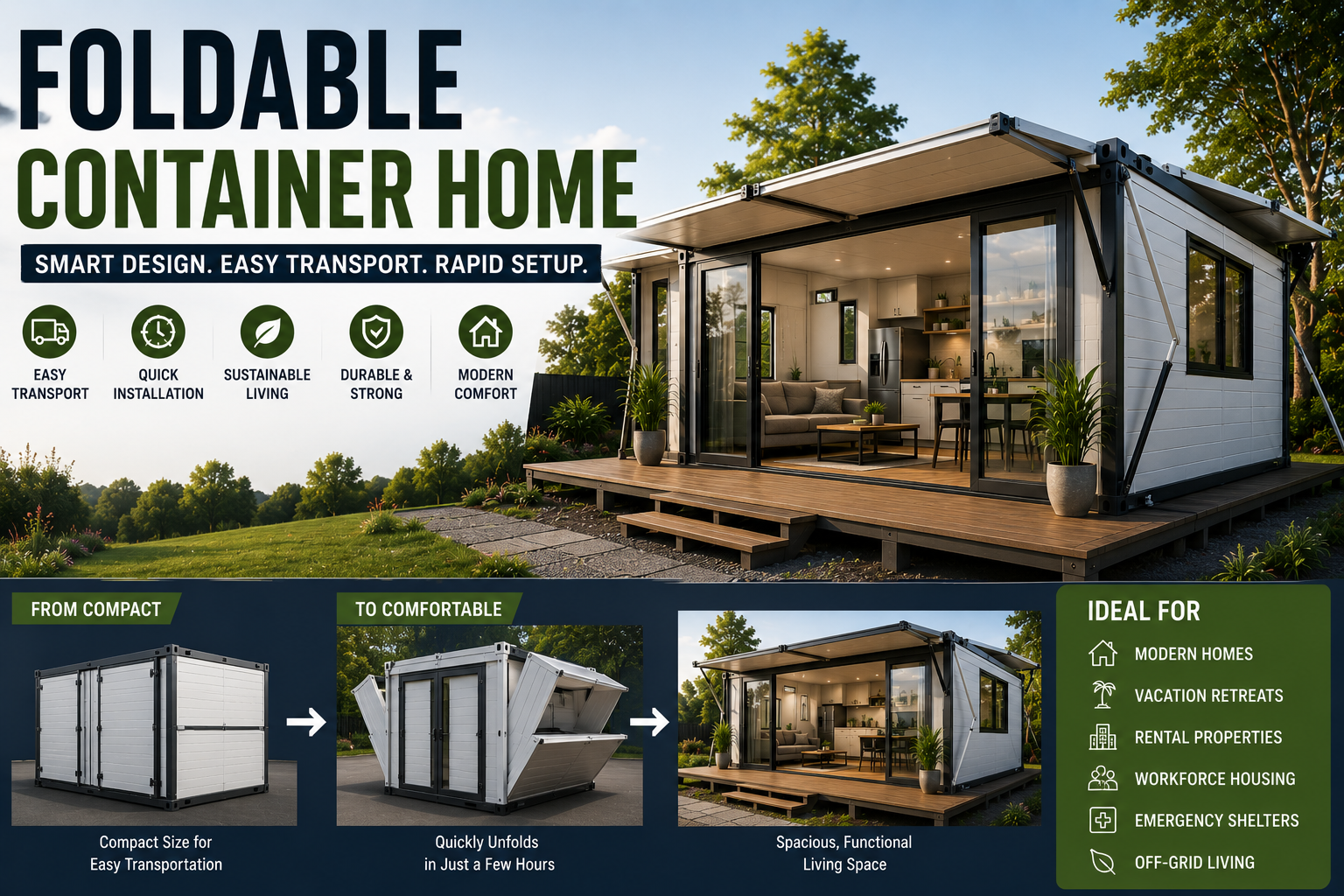
As housing innovation continues to evolve, the foldable container home has emerged as one of the most exciting developments in modern construction. Combining portability, affordability, rapid installation, and sustainable design, they are transforming how people think about residential living, vacation homes, workforce accommodations, and emergency housing.
Unlike traditional homes that require months of construction, they can be transported efficiently and expanded into comfortable living spaces within hours. Their flexibility and cost-effectiveness make them an increasingly popular choice for homeowners, businesses, and developers around the world.
What Is a Foldable Container Home?
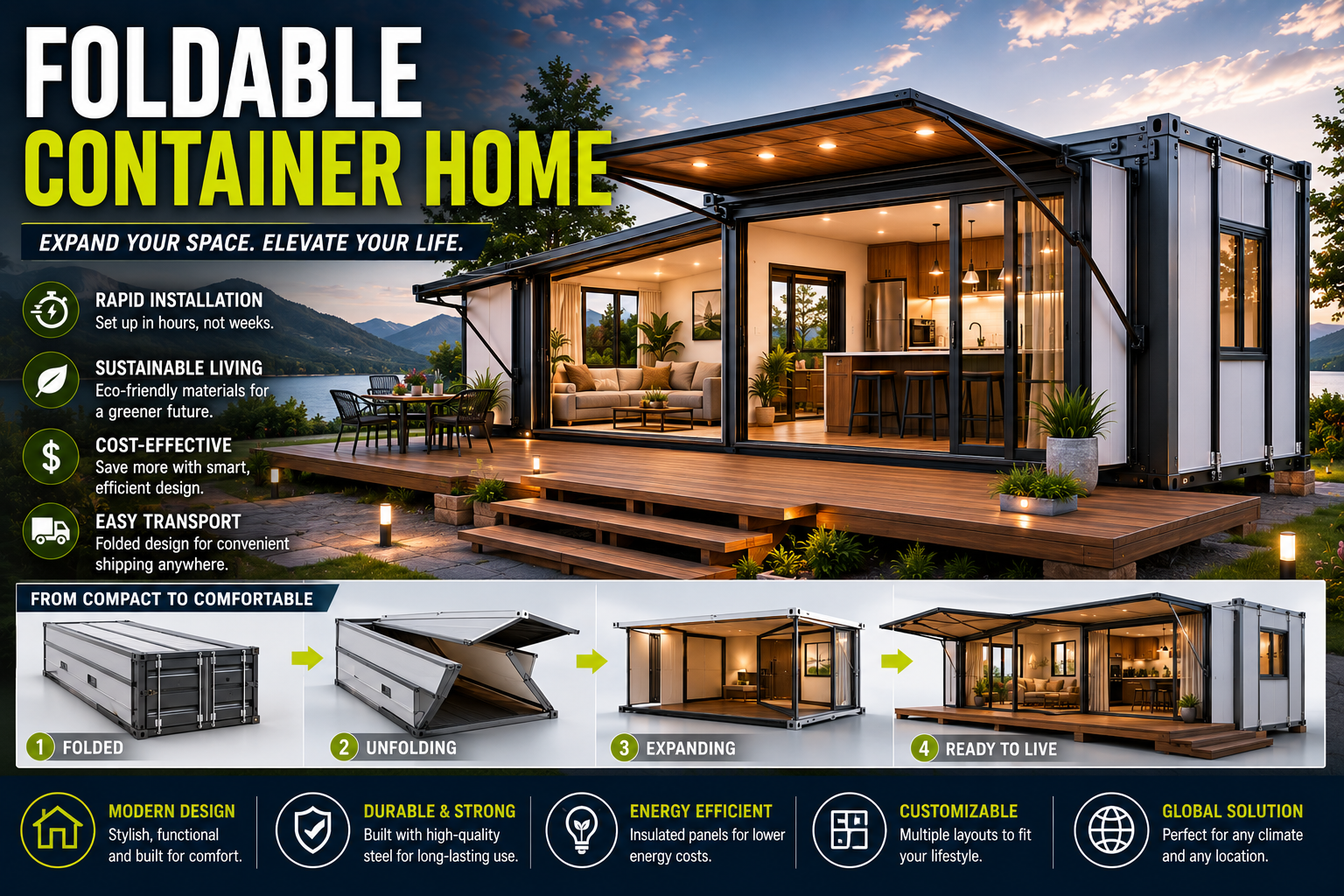
A foldable container home is a prefabricated modular structure designed to collapse into a compact transportable unit and expand into a fully functional home when deployed.
Unlike conventional shipping container homes that maintain fixed dimensions, foldable homes utilize innovative engineering systems that allow walls, floors, and roof sections to fold inward for transportation and unfold on-site.
These homes can serve multiple purposes, including:
- Primary residences
- Vacation homes
- Tiny homes
- Guest houses
- Home offices
- Workforce accommodations
- Emergency shelters
- Temporary housing
Their adaptability makes them one of the fastest-growing trends in alternative housing.
How Foldable Container Homes Work
Compact Transportation
Before delivery, the structure folds into a compact package that takes up significantly less space during shipping.
Benefits include:
- Lower transportation costs
- Easier logistics
- Reduced storage requirements
- More units shipped per load
Quick Deployment
Once delivered, the home expands into a full-size living space using integrated structural systems.
Many foldable homes can be assembled within a few hours, dramatically reducing construction timelines.
Why Foldable Container Homes Are Growing in Popularity
Faster Construction
Traditional homes often require months of planning and construction. Foldable homes can be installed in a fraction of that time.
Cost Savings
Reduced labor requirements and efficient transportation help lower overall project costs.
Sustainable Housing
Many foldable homes are designed with sustainability in mind, featuring:
- Energy-efficient insulation
- Solar-ready systems
- Eco-friendly materials
- Water-saving technologies
Flexibility
These homes can often be relocated or repurposed as needs change, making them ideal for modern lifestyles.
Key Features of a Foldable Container Home
Expandable Living Space
One of the biggest advantages is the ability to create spacious interiors while maintaining compact transportation dimensions.
Modern Interior Design
Many models include:
- Open floor plans
- Full kitchens
- Comfortable bedrooms
- Modern bathrooms
- Built-in storage systems
Durable Construction
Most foldable container homes are built using:
- Reinforced steel frames
- Weather-resistant panels
- High-strength structural components
Energy Efficiency
Advanced insulation systems help maintain indoor comfort while reducing energy consumption.
Popular Uses for Foldable Container Homes
Residential Housing
Homeowners are increasingly choosing these container homes as affordable primary residences.
Vacation Retreats
Their portability makes them ideal for vacation properties in remote or scenic locations.
Rental Investments
Investors use foldable homes for:
- Airbnb rentals
- Vacation accommodations
- Guest suites
- Eco-tourism developments
Emergency and Temporary Housing
Governments and relief organizations frequently deploy foldable housing solutions following natural disasters.
Workforce Housing
Industries such as construction, mining, and energy use foldable homes for temporary worker accommodations.
Benefits of Foldable Container Homes
Lower Transportation Costs
Compact folded dimensions reduce shipping expenses.
Rapid Installation
Many units can be assembled with minimal labor and equipment.
Relocatable Design
Some models can be moved and redeployed multiple times.
Minimal Site Disruption
Prefabricated construction significantly reduces on-site waste and environmental impact.
Modern Appearance
Today’s foldable homes feature attractive architectural designs that rival traditional housing.
Foldable Container Homes vs Traditional Container Homes
Traditional Container Homes
- Fixed dimensions
- Heavier transportation requirements
- Longer modification process
- More permanent installations
Foldable Container Homes
- Expandable layouts
- Faster deployment
- Easier transportation
- Greater flexibility
For many homeowners, foldable designs offer a more practical and efficient housing solution.
Cost of a Foldable Container Home
The overall cost depends on factors such as:
- Home size
- Expansion capability
- Interior finishes
- Utility systems
- Transportation distance
Basic Models
Suitable for temporary housing and simple residential applications.
Mid-Range Homes
Offer larger floor plans and upgraded features.
Luxury Foldable Homes
Include premium finishes, smart technology, and customized layouts.
Even premium foldable homes often remain more affordable than traditional custom-built houses.
Important Considerations Before Buying
Building Permits
Always verify local zoning regulations and permit requirements before purchasing.
Foundation Requirements
Most foldable homes require a stable and level foundation system.
Utility Connections
Water, electricity, sewer, and internet services should be planned in advance.
Climate Adaptation
Choose insulation and HVAC systems that suit your local weather conditions.
Why Homeowners Love Foldable Container Homes
Modern buyers appreciate foldable container homes because they offer:
- Affordability
- Mobility
- Sustainability
- Quick installation
- Contemporary design
- Flexible living options
These benefits make them attractive to a wide range of homeowners and investors.
The Future of Foldable Housing
As housing affordability and sustainability become global priorities, they are expected to play a significant role in the future of residential development.
Advancements in:
- Modular engineering
- Smart home technology
- Renewable energy systems
- Sustainable construction materials
are making foldable homes more comfortable, efficient, and accessible than ever before.
Industry experts predict strong growth in demand for foldable housing over the next decade.
Conclusion
A foldable container home offers an innovative approach to modern living by combining portability, affordability, and rapid deployment with stylish and functional design. Whether you’re seeking a primary residence, vacation retreat, rental property, or temporary housing solution, they provide a practical and future-ready alternative to conventional construction. As technology continues to advance, these expandable housing systems are poised to become a major part of the global housing market.