- Your cart is empty
- Continue Shopping

Collapsible Container Homes: The Future of Portable and Expandable Housing
-
admin
- Posted on
- 0 comments

Collapsible Container Homes: The Future of Portable and Expandable Housing
The housing industry is constantly evolving, and one of the most exciting innovations in recent years is the rise of collapsible container homes. Combining portability, rapid deployment, affordability, and modern design, these expandable housing solutions are transforming how people think about residential, commercial, and emergency shelter construction.
Unlike traditional shipping container homes, they can be folded for transportation and expanded on-site, making them ideal for homeowners, developers, businesses, and humanitarian organizations seeking flexible housing solutions.
What Are Collapsible Container Homes?
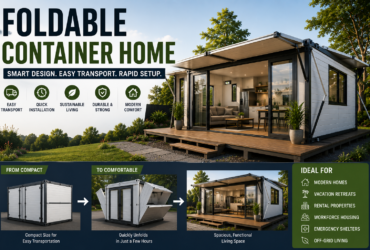
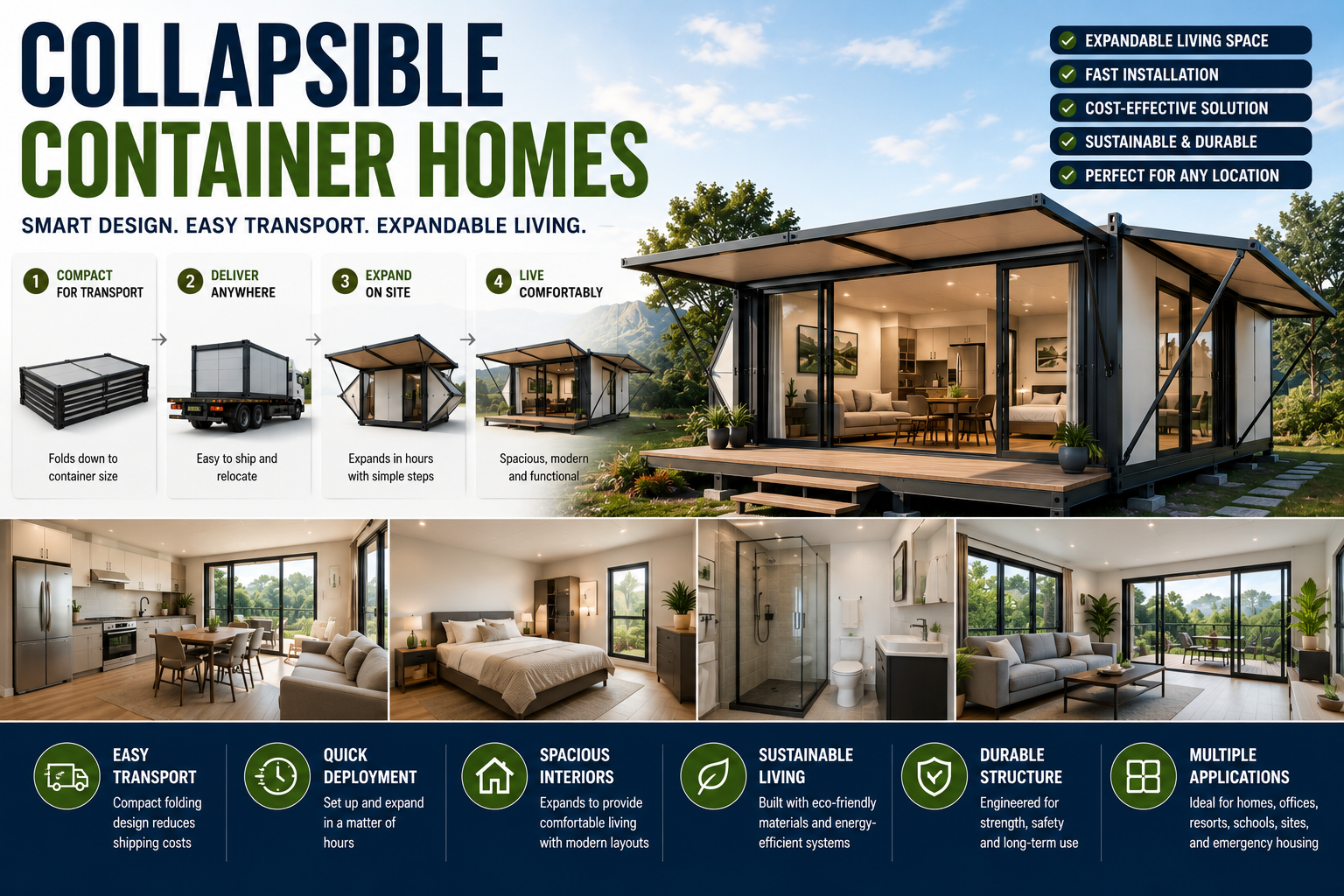
They are prefabricated modular structures designed to fold into a compact transportable unit and expand into a fully functional living or working space when deployed.
Unlike standard shipping containers that maintain fixed dimensions, collapsible units use innovative engineering systems that allow walls, floors, and roof sections to unfold, creating significantly larger interior spaces.
These structures can be customized as:
- Residential homes
- Guest houses
- Vacation cabins
- Temporary housing
- Site offices
- Medical facilities
- Disaster relief shelters
- Workforce accommodations
How Do Collapsible Container Homes Work?
The concept is simple but highly effective.
Transport Mode
The structure folds into a compact container-sized unit for efficient transportation and storage.
Benefits include:
- Reduced shipping costs
- Easier transportation
- More units per shipment
- Simplified logistics
Deployment Mode
Once delivered, the home expands using built-in mechanical systems, creating a much larger living area within a short period.
Some models can be assembled in just a few hours.
Why Collapsible Container Homes Are Becoming Popular
Fast Installation
Traditional homes can take months to build. They can often be deployed and made operational within days.
Cost Efficiency
Reduced transportation expenses and shorter construction timelines can help lower overall project costs.
Space Optimization
Expandable designs provide significantly more interior space than standard containers during use while remaining compact during transport.
Sustainability
Many collapsible homes incorporate:
- Energy-efficient insulation
- Solar power compatibility
- Eco-friendly materials
- Low-waste construction methods
Mobility
These homes can often be relocated more easily than conventional housing structures.
Key Features of Collapsible Container Homes
Expandable Living Areas
When unfolded, these homes create spacious interiors suitable for comfortable everyday living.
Modern Interior Design
Many units feature:
- Open-concept layouts
- Contemporary kitchens
- Full bathrooms
- Built-in storage
- Large windows
Durable Construction
Most collapsible container homes are built using:
- Galvanized steel frames
- Weather-resistant panels
- Reinforced structural systems
Energy Efficiency
Modern units often include:
- Insulated wall systems
- Double-glazed windows
- Efficient HVAC systems
- Solar-ready infrastructure
Popular Applications
Residential Housing
Many homeowners choose collapsible container homes as:
- Primary residences
- Vacation homes
- Tiny homes
- Backyard guest houses
Emergency Housing
Government agencies and humanitarian organizations use collapsible structures for rapid disaster response and temporary housing.
Workforce Accommodation
Mining, energy, and construction companies frequently deploy collapsible housing for remote work sites.
Hospitality and Tourism
Expandable container homes are becoming increasingly popular for:
- Eco-resorts
- Glamping sites
- Vacation rentals
- Boutique accommodations
Benefits of Collapsible Container Homes
Reduced Transportation Costs
Because units fold compactly, more structures can be transported simultaneously.
Quick Deployment
Fast installation minimizes labor costs and project timelines.
Flexible Usage
Homes can be relocated, expanded, or repurposed as needs change.
Minimal Site Disturbance
Prefabricated construction reduces on-site waste and environmental impact.
Modern Aesthetics
Today’s collapsible homes offer attractive designs that rival traditional housing.
Potential Challenges
Local Building Codes
Some jurisdictions have specific regulations regarding modular and collapsible housing.
Foundation Requirements
Although installation is faster, many units still require properly prepared foundations.
Utility Connections
Water, electrical, and sewage systems must be planned before deployment.
Limited Customization
Certain expandable models may offer fewer customization options than fully custom-built homes.
How Much Do Collapsible Container Homes Cost?
Pricing varies depending on:
- Size
- Expansion capability
- Interior finishes
- Utility systems
- Transportation distance
Basic Units
Suitable for temporary housing and simple residential applications.
Mid-Range Models
Offer larger living spaces and upgraded finishes.
Luxury Expandable Homes
Feature premium materials, smart technology, and modern architectural elements.
Even high-end collapsible homes often remain more affordable than traditional construction projects.
Collapsible Container Homes vs Traditional Container Homes
Traditional Container Homes
- Fixed dimensions
- Permanent modifications
- Heavier transportation requirements
- Longer construction timelines
Collapsible Container Homes
- Expandable layouts
- Faster deployment
- Reduced transport costs
- Greater portability
For many buyers, collapsible designs provide the best combination of convenience and functionality.
The Future of Collapsible Housing
As housing affordability, sustainability, and disaster preparedness become increasingly important, collapsible container homes are expected to play a larger role in global housing solutions.
Advances in:
- Lightweight materials
- Smart home technology
- Renewable energy systems
- Modular engineering
are making expandable housing more attractive than ever before.
Industry experts predict significant growth in collapsible housing applications over the next decade.
Why Homeowners Are Considering Collapsible Container Homes
Today’s buyers want housing solutions that offer:
- Flexibility
- Affordability
- Fast construction
- Sustainability
- Modern design
They meet all of these demands while providing a unique alternative to conventional housing.
Conclusion
Collapsible container homes represent one of the most innovative developments in modern housing. Their ability to fold for transportation and expand into comfortable living spaces makes them ideal for a wide range of applications, from permanent residences and vacation homes to emergency shelters and workforce housing. As technology continues to improve, they are poised to become a major part of the future housing landscape, offering an efficient, sustainable, and highly adaptable solution for modern living.