- Your cart is empty
- Continue Shopping

Shipping Container Home Permits: Complete Guide to Approval & Regulations
-
admin
- Posted on
- 0 comments
Shipping Container Home Permits: Everything You Need to Know Before Building
Building a shipping container home can be an exciting and cost-effective way to create a unique, sustainable living space. However, before purchasing containers or finalizing floor plans, it’s essential to understand shipping container home permits and the regulations that govern container construction.
Many aspiring homeowners focus on design and budget but overlook the permitting process. Obtaining the proper permits is one of the most important steps in ensuring your project is legal, safe, and approved by local authorities.
In this guide, we’ll explain everything you need to know about shipping container home permits, common requirements, and how to navigate the approval process successfully.
What Are Shipping Container Home Permits?
Shipping container home permits are official approvals issued by local government agencies that allow you to legally build and occupy a container home. These permits verify that your project complies with local zoning laws, building codes, safety standards, and environmental regulations.

Like traditional homes, container houses must meet specific requirements related to structural integrity, electrical systems, plumbing, insulation, and occupancy.
Why Are Permits Necessary?
Permits help protect homeowners, neighbors, and communities by ensuring that structures are built safely and responsibly.
Proper permits can:
- Verify structural safety
- Ensure code compliance
- Protect property value
- Simplify future resale
- Reduce legal risks
- Facilitate utility connections
- Meet insurance requirements
Building without permits can result in fines, construction delays, or even forced removal of the structure.
Common Permits Required for Container Homes
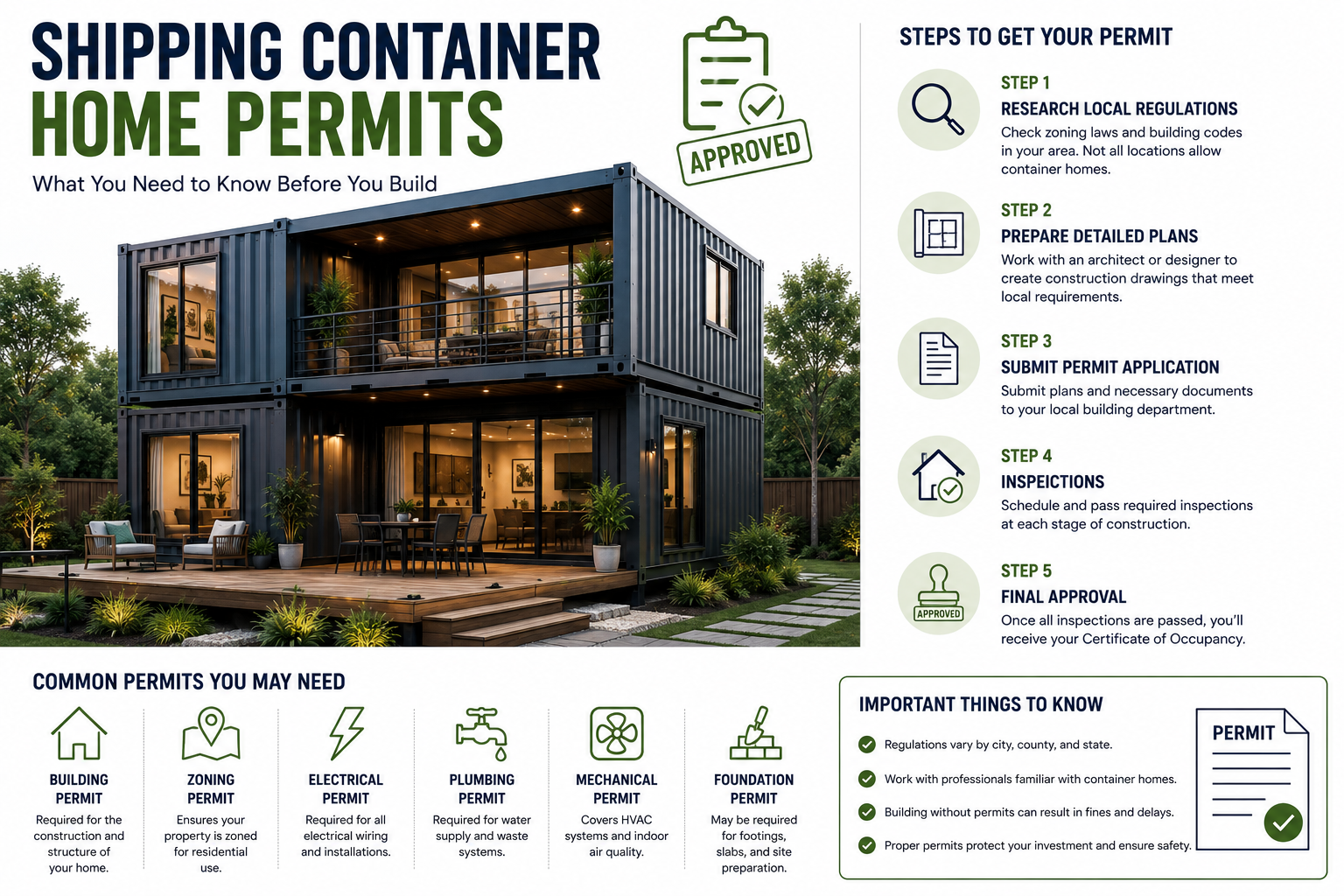
Building Permit
The building permit is typically the most important approval required for container home construction. It confirms that your design meets local building regulations and structural standards.
Zoning Permit
Zoning regulations determine whether container homes are allowed in a specific area. Some residential zones permit container homes, while others may have restrictions regarding appearance, size, or use.
Electrical Permit
Electrical permits ensure that wiring systems are installed safely and comply with electrical codes.
Plumbing Permit
If your container home includes water supply and drainage systems, plumbing permits are usually required.
Mechanical Permit
Mechanical permits often cover heating, ventilation, and air conditioning (HVAC) installations.
Foundation Permit
Many jurisdictions require separate approval for foundations, footings, and site preparation work.
Understanding Zoning Laws
Before purchasing land or containers, research local zoning regulations carefully.
Important questions to ask include:
- Are shipping container homes allowed?
- What are the minimum square footage requirements?
- Are there height restrictions?
- Are accessory dwelling units (ADUs) permitted?
- Are there architectural design requirements?
- What setbacks are required from property lines?
Zoning rules vary significantly between cities, counties, and states.
Building Code Requirements for Container Homes
Container homes must often comply with the same building codes as traditional houses.
Common code requirements include:
Structural Safety
Modifications such as cutting walls, adding windows, and stacking containers may require engineering approval.
Insulation Standards
Steel containers conduct heat and cold efficiently, making proper insulation necessary for energy efficiency and occupant comfort.
Fire Safety
Local authorities may require smoke detectors, fire-resistant materials, emergency exits, and fire separation measures.
Energy Efficiency
Many building departments enforce energy codes that regulate insulation, windows, HVAC systems, and overall energy performance.
Accessibility Requirements
Depending on the project’s purpose, accessibility standards may apply.
Steps to Obtain Shipping Container Home Permits
1. Research Local Regulations
Contact your local planning department to determine whether container homes are permitted in your area.
2. Develop Detailed Plans
Prepare professional construction drawings that include:
- Floor plans
- Elevations
- Structural details
- Foundation plans
- Electrical layouts
- Plumbing systems
3. Hire Qualified Professionals
Working with architects, engineers, and contractors experienced in container construction can simplify the approval process.
4. Submit Permit Applications
Submit all required documentation to the appropriate local agencies for review.
5. Schedule Inspections
Most jurisdictions require inspections during various stages of construction, including:
- Foundation installation
- Structural work
- Electrical systems
- Plumbing systems
- Final occupancy inspection
6. Receive Final Approval
Once all inspections are passed, you’ll receive a certificate of occupancy allowing you to legally move into the home.
Common Challenges When Seeking Permits
Unfamiliarity with Container Homes
Some building officials may have limited experience reviewing container home projects, which can lead to additional documentation requests.
Design Restrictions
Certain communities enforce architectural guidelines that may affect exterior appearance.
Engineering Requirements
Structural calculations are often necessary when modifying or stacking containers.
Utility Approval
Water, sewer, and electrical providers may have specific requirements before service connections are approved.
Tips for Faster Permit Approval
Work with Experienced Professionals
Architects and engineers familiar with container construction can prepare permit-ready plans that satisfy local requirements.
Communicate Early
Meet with planning officials before finalizing your design to identify potential issues.
Provide Complete Documentation
Incomplete applications often cause delays. Ensure all plans and supporting documents are submitted correctly.
Follow Local Codes
Design your home to meet local building standards from the beginning rather than making costly revisions later.
How Much Do Shipping Container Home Permits Cost?
Permit costs vary depending on location, project size, and local regulations.
Factors that influence permit fees include:
- Home size
- Construction value
- Utility installations
- Engineering reviews
- Inspection requirements
Budgeting for permits early in the planning process can help avoid unexpected expenses.
The Future of Container Home Regulations
As container homes become more popular, many municipalities are updating building codes and zoning regulations to better accommodate alternative housing solutions. This growing acceptance is making it easier for homeowners to obtain shipping container home permits in many regions.
However, regulations still vary widely, making local research essential before beginning construction.
Conclusion
Obtaining shipping container home permits is a critical step in building a legal, safe, and successful container home. By understanding zoning laws, building codes, and permit requirements, homeowners can avoid costly delays and ensure their projects move forward smoothly. Careful planning, professional guidance, and proactive communication with local authorities will help make your container home dream a reality.