- Your cart is empty
- Continue Shopping

Container Home Floor Plans: Smart Layouts for Modern Living
-
admin
- Posted on
- 0 comments
Container Home Floor Plans: Designing Smart, Stylish, and Functional Living Spaces
As shipping container homes continue to gain popularity, one of the most important aspects of any project is choosing the right container home floor plans. A well-designed floor plan maximizes available space, improves functionality, and creates a comfortable living environment while maintaining the unique appeal of container architecture.
Whether you’re building a compact tiny home, a family residence, or a luxury retreat, understanding different container home floor plans can help you create a home that perfectly suits your lifestyle and budget.
What Are Container Home Floor Plans?
Container home floor plans are detailed layouts that show how living spaces are organized within one or more shipping containers. These plans include room dimensions, furniture placement, utility locations, and traffic flow to ensure efficient use of space.
Because shipping containers have fixed dimensions, careful planning is essential to make every square foot functional and comfortable.
Why Floor Plans Matter in Container Homes
Unlike traditional houses, shipping containers have narrower interiors that require thoughtful design. A good floor plan helps homeowners:
- Maximize usable living space
- Improve natural lighting
- Enhance ventilation
- Increase storage capacity
- Create comfortable room layouts
- Reduce construction costs
- Improve energy efficiency
The right floor plan can transform a simple container into a beautiful and practical home.
Popular Types of Container Home Floor Plans
Single Container Floor Plans
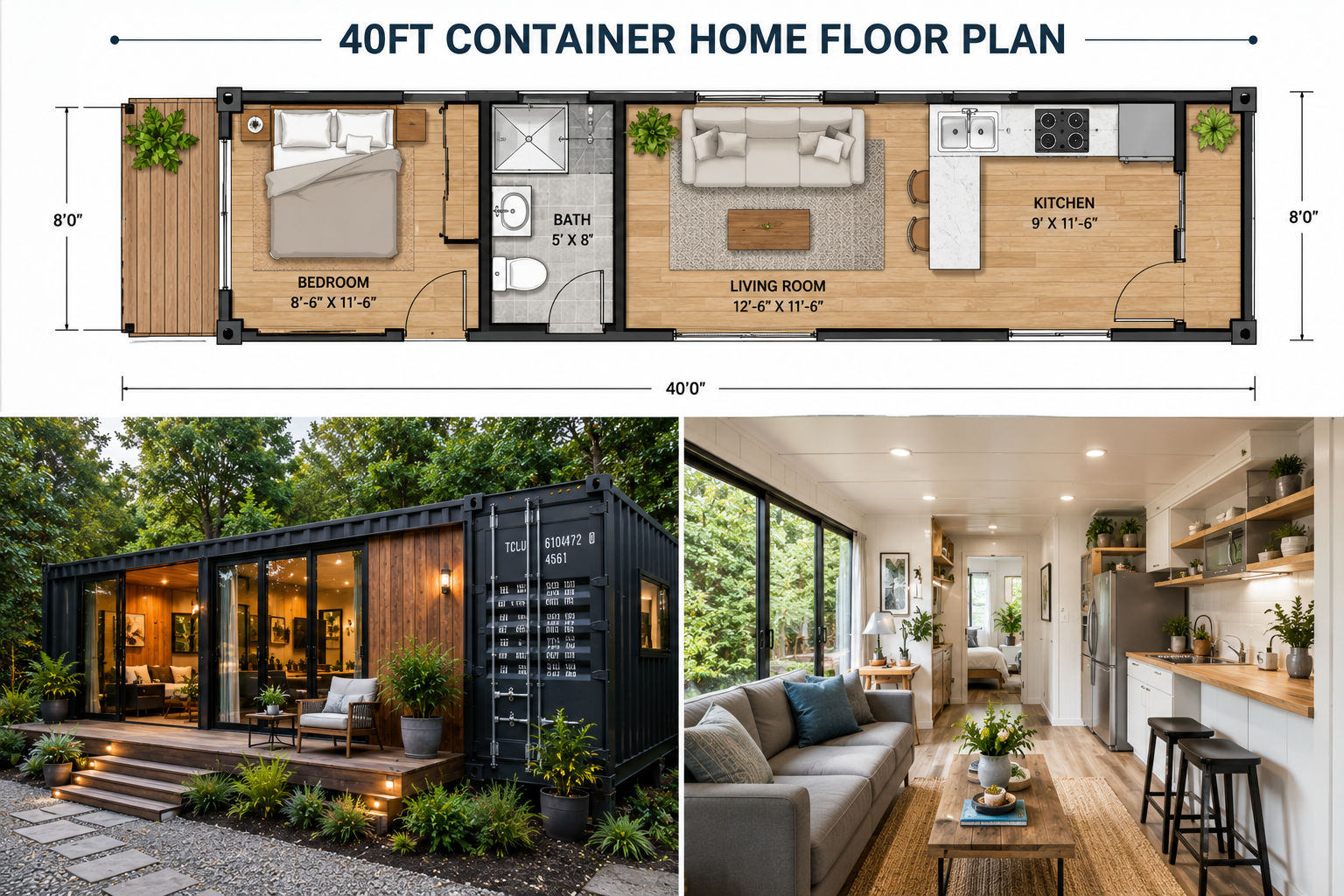
Single-container homes are ideal for individuals, couples, or vacation properties. These plans typically use a 20-foot or 40-foot shipping container and include:
- Open-concept living area
- Compact kitchen
- Bathroom
- Sleeping space
- Built-in storage solutions
These layouts focus on simplicity and efficient use of space.
Two-Container Floor Plans
Combining two containers creates significantly more living space and design flexibility. Common configurations include:
- Side-by-side layouts
- L-shaped designs
- Parallel container arrangements
These floor plans often feature separate bedrooms, larger kitchens, and spacious living areas.
Multi-Container Family Homes
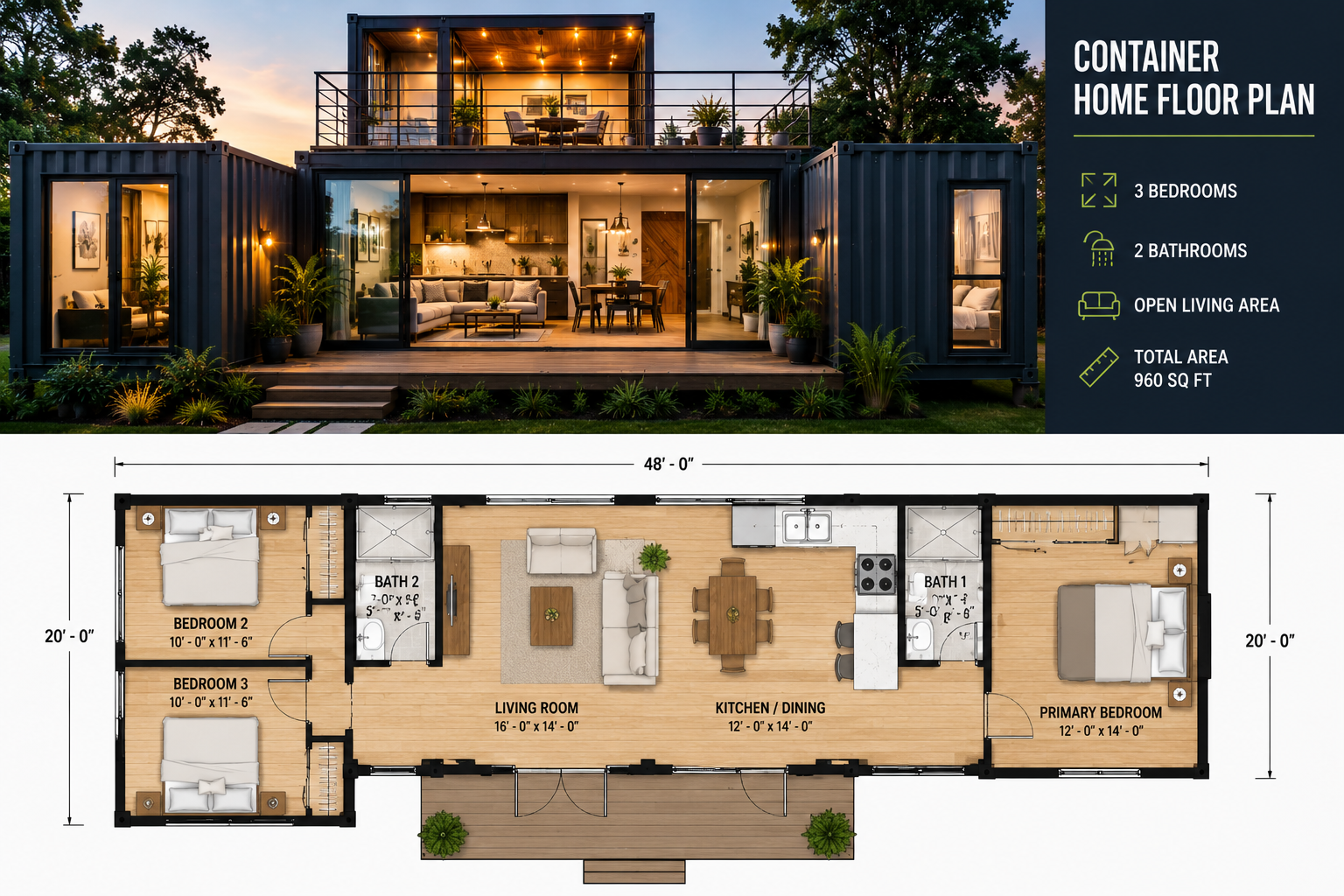
For larger households, multiple containers can be combined to create homes with:
- Three or more bedrooms
- Multiple bathrooms
- Home offices
- Dining rooms
- Entertainment areas
These designs closely resemble traditional family homes while maintaining the benefits of modular construction.
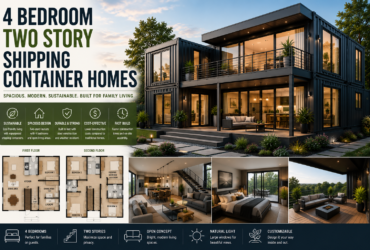
Two-Story Container Homes
Stacked container designs allow homeowners to maximize vertical space without increasing the building footprint. Popular features include:
- Private upstairs bedrooms
- Rooftop terraces
- Open living spaces
- Modern architectural styling
Two-story floor plans are ideal for smaller lots and urban environments.
Essential Features of Effective Container Home Floor Plans
Open Concept Living Areas
Open layouts help container homes feel larger and more inviting by reducing unnecessary walls and barriers.
Smart Storage Solutions
Built-in cabinetry, under-bed storage, and multifunctional furniture help maximize every available inch.
Natural Light Integration
Large windows, sliding glass doors, and skylights create brighter interiors and make spaces feel more expansive.
Indoor-Outdoor Living
Many container home floor plans incorporate patios, decks, and rooftop spaces that extend the home’s living area outdoors.
Container Sizes and Floor Plan Options
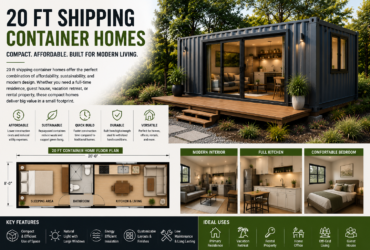
20-Foot Container
Approximate interior space: 160 square feet
Suitable for:
- Tiny homes
- Guest houses
- Home offices
- Vacation cabins
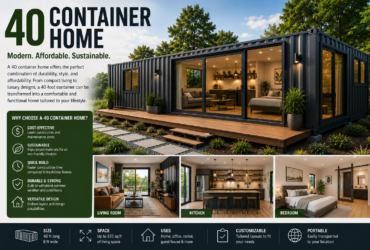
40-Foot Container
Approximate interior space: 320 square feet
Suitable for:
- Full-time residences
- Studio apartments
- One-bedroom homes
High Cube Containers
These containers provide additional ceiling height, creating a more spacious feel and allowing for loft areas and larger windows.
Tips for Choosing the Right Container Home Floor Plan
Consider Your Lifestyle
Think about how you’ll use the space. A remote worker may need a dedicated office, while a family may prioritize multiple bedrooms.
Plan for Future Needs
Choose a layout that allows for future expansion if your needs change over time.
Prioritize Functionality
A beautiful design should also support daily living with practical room arrangements and adequate storage.
Evaluate Site Conditions
The size, shape, and topography of your property can influence which floor plans work best.
Focus on Energy Efficiency
Position windows strategically and incorporate insulation to improve comfort and reduce utility costs.
Common Mistakes to Avoid
When selecting container home floor plans, avoid:
- Overcrowded layouts
- Insufficient storage
- Poor traffic flow
- Limited natural light
- Ignoring local building regulations
- Underestimating insulation requirements
Careful planning can help prevent expensive modifications later.
Benefits of Professional Floor Plan Design
Working with architects or container home specialists can provide several advantages:
- Customized layouts
- Structural engineering support
- Permit-ready documentation
- Cost optimization
- Improved functionality
Professional guidance often results in a more efficient and successful project.
The Future of Container Home Floor Plans
As container housing becomes more mainstream, floor plans continue to evolve. Modern designs now incorporate smart home technology, sustainable building systems, flexible living spaces, and innovative modular layouts.
Advancements in architecture and construction techniques are making container homes more comfortable, attractive, and adaptable than ever before.
Conclusion
Choosing the right container home floor plans is one of the most important decisions you’ll make when designing a shipping container home. A thoughtfully designed layout can maximize space, improve comfort, and enhance the overall living experience. Whether you’re interested in a tiny home, a family residence, or a luxury container retreat, the right floor plan can help turn your vision into reality while making the most of every square foot.